About Marco
Introduction by Chris Allen (New Musical Express)
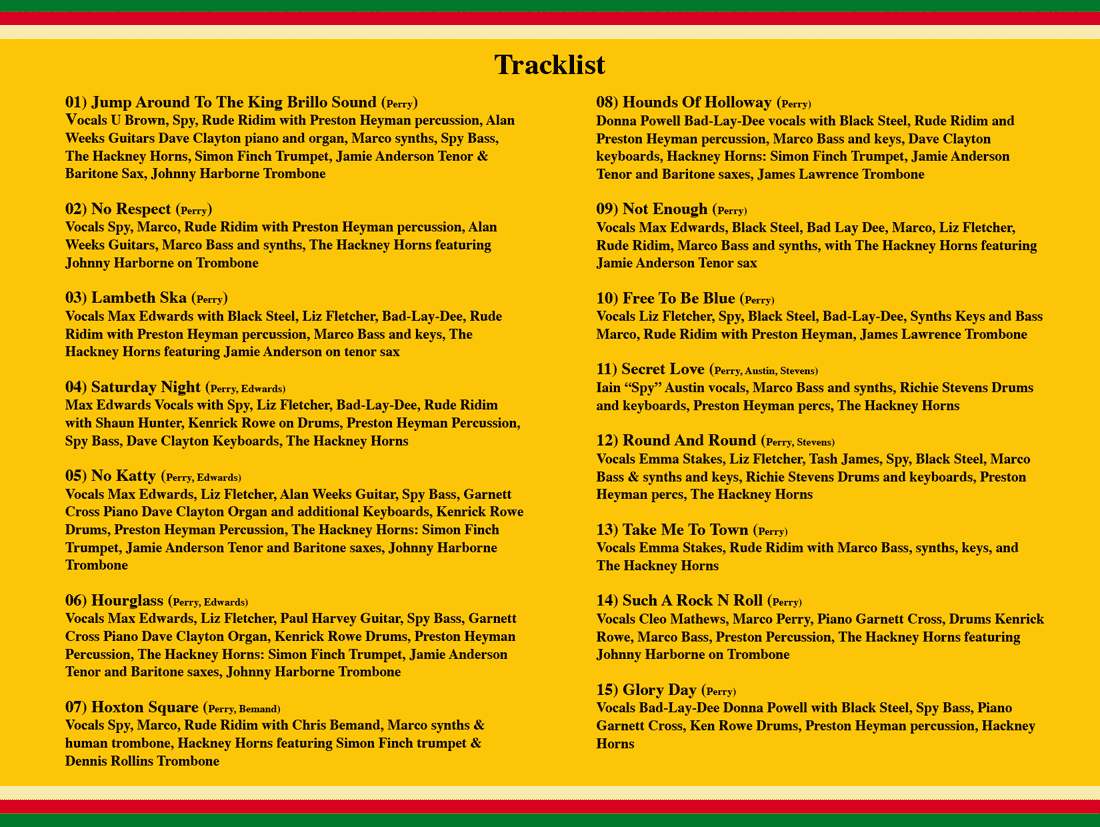
When not tearing it up on his hopped up 1969 Triumph T120 motorbike Marco Perry, Musician, Composer, Producer, and Musicologist of renown can be found in The Beat Farm, refining and redefining The King Brillo Sound… a veritable Doctor Strangelove of dub, bringing together an eclectic blend of some of London’s finest musical talent, his mission: to unleash killer beats and irresistable melodic hooks on a public too long starved of real music.
With his previous experience he’s more than qualified to re-write the rule book… So…
Old skool, New skool this is the one True skool
Let your feet do the talking and as the man says…

Music commentary and Interview by Kris Needs - January 2008
The interview takes place in The Beat Farm London. The lights are low in the mixdown room as the winter sun casts it’s rays.
Marco is weary and alert ready to field my questions which are several. How did he arrive at this new location? and especially considering the sheer weight of the studio equipment and the size of the mixing desk and outboard gear ?
KN: (chuckles) Well I know that we’re only just up the road from the old place but this must’ve been quite a move right?
MP: Sure it’s been completely mental!
We had some friends help us with the move. ex-army chums, biker mates, some large rastamen, Between us we had enough muscle and brains to sort it out.
.
KN: How do you find this room compared to your last?
MP: Well to start with I’ve got daylight and fresh air. This is a good location, We’ve got a café and a bar, rehearsal rooms, storage cages, production rooms, offices for music related people etc.. This place is buzzin and this room sounds great. The acoustic design really works. It’s quite a live sound evrywhere in here but nicely controlled so the balance is pretty much the same if you’re at the back of the room or if you’re sitting in front of the mixer.
KN: What product is coming out of the new studio so far?
MP: Well I’ve mixed some new King Brillo featuring Tash James on vocals. She has a big rich choclatey voice, she’s training for opera and she sounds fantastic on this particular song. So just finishing that and other songs and also some ideas that I wanted to try out on the new set up.
KN: Like what?
MP: Well for example the H3000 harmonizers sound great with the front ends being driven by a Culture Vulture and resampled for effects on certain tracks.
KN: You’ve lost me!
MP: Sorry Kris! It’s just an idea that I came up with to create short but epic soundscape type effects that I could use as a library of wackyness and to put in my bag of tricks for King Brillo. Also theres a chance of doing some movie music which I’m not supposed to talk about but I’m getting prepared.
KN: Aha I see, So you’re stockpiling sound effects.
MP: Sort of … more like I take a techno bath now and again! If I delve into this kind of technical madness ..sometimes it helps…and it was also a good way to check the room acoustics. Also I’ve recently done some teaching and it was a good demonstration for the pupils. Then there’s The Pressure Zone which is me and Dave’s New Jazz Funk outfit and we’ve been busy with getting all our new stuff finished. 2 Tek is another of our recording projects, That’s much more synth based and sequenced. Apart from that, Well this is a commercial space as well. When I left the Brain Yard I split the studio up and me and Dave built another room over in Roehampton to be used as a composition, writing, and pre-production room for Pressure Zone and for King Brillo. We got another load of our equipment set up over there so I have no excuse to sit on my backside now.. believe me!
Also this room is available for hire and with me or Nick Terry in it to operate, .. or do more if required.
KN: I’ve heard of Nick Terry, he’s an engineer right?
MP: Nick is an engineer of the first order and has mixing work to bring in here including James Ford, Simian Mobile Disco and the Klaxons amongst others. Nick recorded and mixed The Libertines albums and mixed the Mercury prize award winning Klaxons album.
KN: What’s coming up from King Brillo this year then?
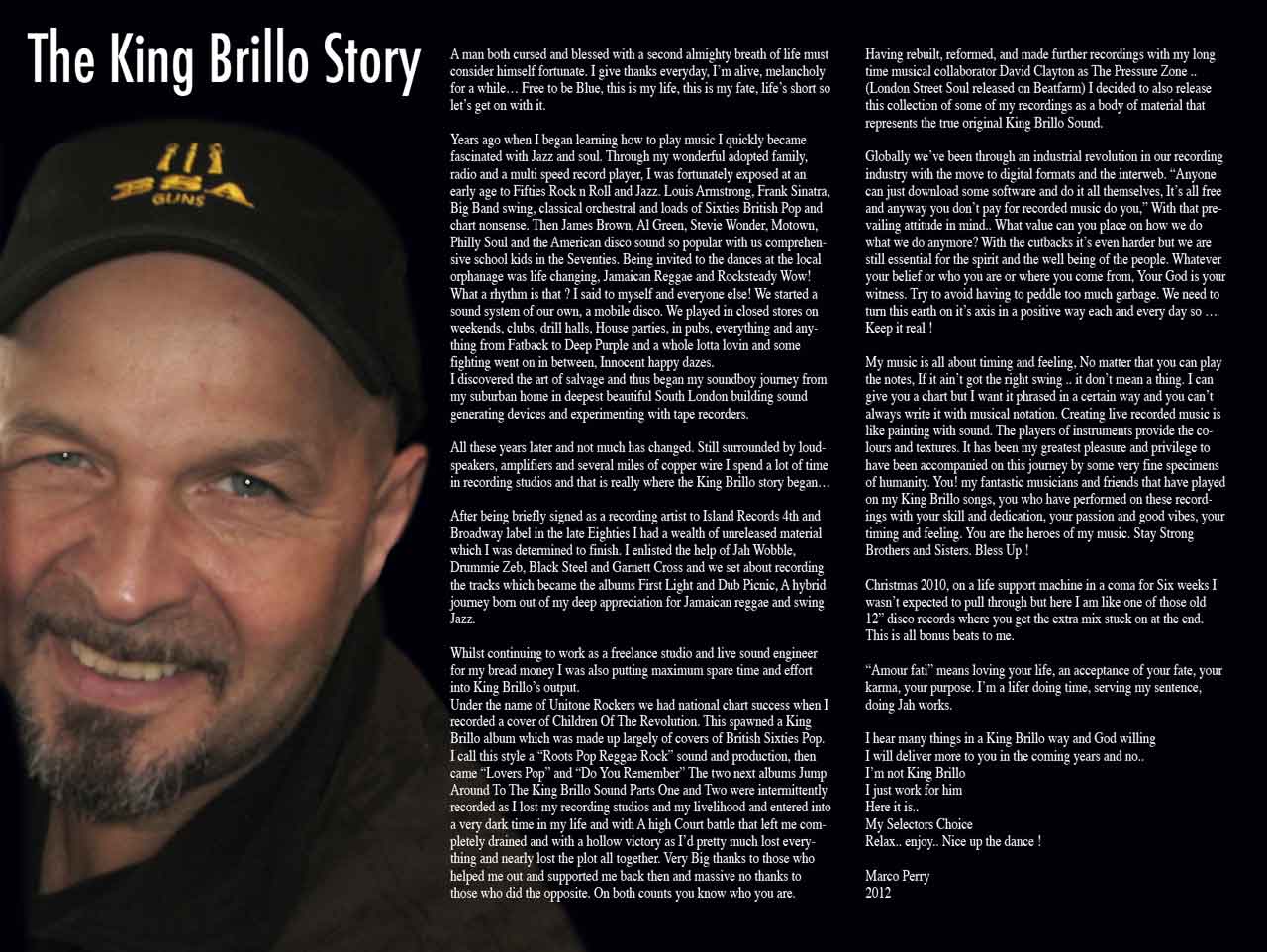
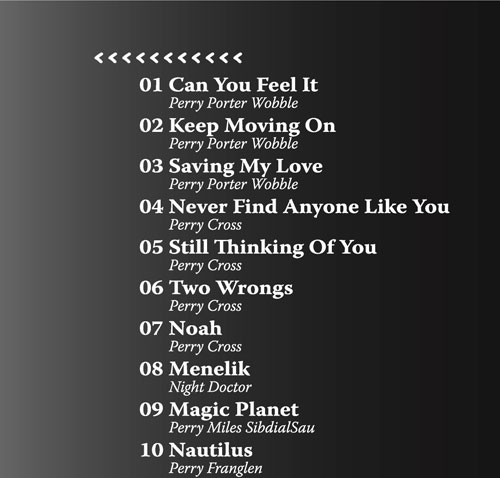
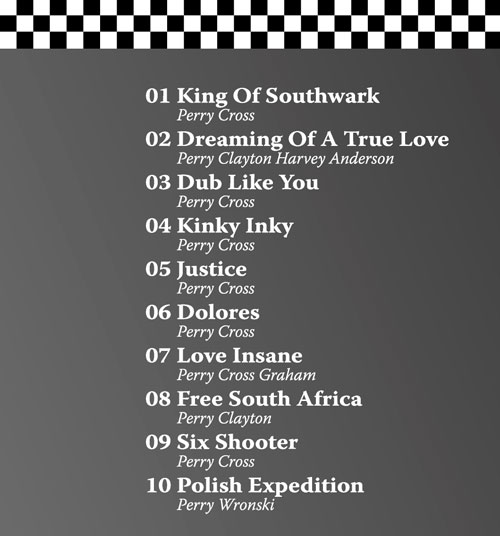
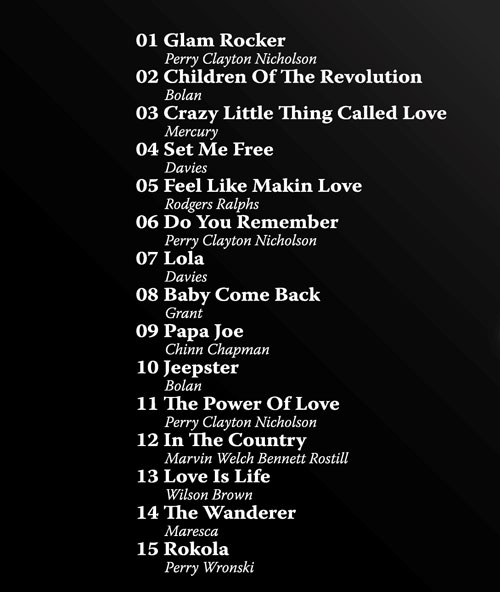
MP: After my motorbike smash in April last year I cancelled all the live shows we had booked. The hand operation messed me up and the pain killers made it difficult to perform or operate and after the Lambs Conduit Street party I decided I’d be better off in the studio, so apart from Pressure Zone and 2TEK recordings, most of the rest of 2007 was spent finishing and compiling the new King Brillo Sound L.P.s ..plus the live mixes from the sound system so.. I compiled some of Brillo’s early stuff including recordings with Jah Wobble and Aswad’s Drummie, Then took some of the dubs I did at that time and made that another L.P. selection so it’s more an instrumental album. Then I compiled some of the covers with Black Steel around 96 and mixed an L.P. of Rock Reggae. Also I had a load of unfinished material up to now and so I wrote new parts and enlisted the help of a few choice musicians to play on what is now called “The King Brillo Sound” parts One and Two which are a blend of live and programmed stuff, some vocal, some instrumental, some dubs. some new tracks as well which I’d love to take out live! ..but that’ll depend on the state of my physical health. I’m told by the surgeons that I need another two operations before I can consider getting any real improvement in the movement of my right hand. So for now I’m just in the studio. I’ll review the situation as the year progresses and see when it’s possible to make a show.
KN: What would this years show be like. I know you were booked to play at Falsie and some of the festival circuit this year, Is that still a possibility?
MP: Very definitely yes. If we get the finance of course we can go out big! ..Which is what I’d really like to see. But Hey! Small is beautiful too and that’s the great thing about the King Brillo Sound.
KN: Can you give me an example of the line up?
MP: So for example we can play a bar with just myself and Pat (Atkinson) spinning 7’s and our stuff and mixing it up with lyric and MC and me on the desk and doing live dubs and that show can really move the people, Intimate like. If we take out the Sound System it’s always gonna be a blast! Or at the other end of the scale we can have drums, bass, guitars, keyboards and a four piece horn section with front line vocals and the dancers and singers too. With King Brillo live, those options are always there to be had and in between as well. It’s mainly down to funding… The more players, the bigger the show, the more the cost.. Stands to reason don’t it.
KN: Looking back to the past, Where did the inspiration to be King Brillo come from and how did you get it started?
MP: Well first of all Kris, As you well know, I will never admit to being King Brillo and always I tell you that I just work for him. And the inspiration… It comes from above.
KN: Okay Okay …
MP: I began way back in the 70’s in South London. My fascination of tape recorders and microphones and audio electronics led me to salvage. I built primitive sound generating devices and began my soundboy journey. Plus playing with various mates bands then after many years of live sound and recording studio work in the UK and in the USA I set up The Beat Farm as a recording facility for my own music but also as a commercial studio facility. Gradually I stopped freelance engineering and the commercial studio took over my life. I got kinda stuck with all the pressure of that business and the craziness. My friend Billy Osbourne once said to me “Marco what inspired you to do this in the first place” “Remember KTDA” (Keep The Dream Alive) I guess that’s about when King Brillo started! I got together with Wob (Jah Wobble) and we worked out a few ideas. He was still on the sauce as well and our ideas flowed endlessly. We actually recorded quite a lot back then. A right mish mash of rock and jazz and reggae. That’s how it started. It just kept progressing as a studio project and took on board various musicians as we went along. So a bit like a collective.
Over the years I’ve had the opportunity to record with some great performers and some right characters.
KN: Where would you like to take the King Brillo Sound from here?
MP: Well there’s so much talent around me I’d need several lifetimes to give a voice to all that I hear in a King Brillo way. …But to be more specific.. As you can see I’ve collected quite a lot of equipment over the years. But it don’t mean a thing if you ain’t got a good tune. Being a horn player myself I tend to favor the harmony and excitement generated by 3 or four players blowing down tubes of brass. Just now I’m working with my computer, A big fat apple mac, and this is how I start. Drums and a Bass line and chords. Sometimes I already have an idea for a horn part or a melody, often it comes together quite quickly I’ll get other players in, Try ideas, see what works, and then that’s when it all becomes real. There’s nothing like bouncing with others in a creative process. When I mix King Brillo I’ll even remove parts or add more ideas, I look to the mix as an opportunity to put a time stamp on the personality of the song, Like sending a picture postcard. But it will always depend on the day how the thing eventually sounds. Then if I live with a mix for a while I can decide if I’m happy or not quite. Actually I mostly leave them alone once mixed even if there are things that ain’t perhaps as perfect as they might be. I rather would capture a feeling in my music, and the mix for me is like a performance as well. I’ll be working the board (mixing desk) right up to the last note to drain every last drop of musical juice from my mix. It can be very exciting like a live performance and If I’m happy with my performance then I’ll leave it alone. I could do another one and another .. But generally I don’t. The mix is like the coming together of all the previous hard work and I do it when it’s ready.
My music is all about timing and feeling so most parts are played in by ear. In other words I don’t rely on strict sequence software for the timing, in the end it’s down to a feeling and I’ll spend a long time getting the parts to sit right with each other, moving them in the arrangement sometimes by almost imperceptible increments of time. King Brillo may not always have played the song together and at the same time but I want us always to be a band.
KN: Timing and feeling eh? Well your music sounds quite natural to me Marco, Where does it come from?
MP: With me It’s from jazz and soul, Blues and reggae. I think the hardest musics to play for some musicians are Jazz and reggae because no matter you can play the notes and the parts. If you don’t feel it right you ain’t never gonna convince. So timing and feeling are everything. … Actually as in any music, but Jazz and reggae are a different game. And yes it needs to be played naturally.
KN: You mentioned teaching earlier. What’s that about?
MP: Well I was offered the chance to take on some students from the Brit School in Croydon and I agreed to give them some training and show them a working studio environment and it just led to me having to think about a curriculum and what was most important and how I could pass the knowledge to them and do the job properly. Actually I really enjoyed doing it . I began with saying “What is Sound?” Then I took them through an explanation of sound waves and air pressure and transducer theory then microphones and loudspeakers, Then signal paths, Signal flow, Digital and analog outboard equipment, Mixing desks, Virtual recording, Hard disk recording, Analog tape recording. And at the end of the two weeks they got to do a live recording session with drums, bass guitar and Keyboards! I made them write everything down and constantly tested them on what I taught to see if it had gone in properly, and more to the point.. That they had understood it. It was hard work but very rewarding. Blimey If they’d had a school like that in my day! To go to college every day and learn about music and recording! I can only imagine… There was nothing like it in the seventies back then. You had to learn the hard way and “hands on” ..that’s if you could get a job in a recording studio at all. The first thing I learned about recording techniques was how many sugars everyone took in their tea!
KN: Where was that and what else did you learn?
MP: My first studio job was at Kingsway Recorders in 1977 Formerly De Lane Lee. It was bought by Ian Gillan of Deep Purple and run commercially. I learned from great engineers.. Martin Birch, Louis Austin, Paul Chas Watkins, John Acock, I was taught on site and on the job so to speak. Then I worked at Gooseberry in Gerrard Street and at Tulse Hill and learned from Mark Lusardi and the great Dennis Bovell. Then I went to the states and found work at Wally Hieders Hyde Street Studios in San Francisco then Harbor Sound and Record Plant, and in LA at Cherokee and Fiddler on Melrose. Those were great times for me and I look back and sometimes have a laugh. There are more than a few stories to be told but that’s gotta be for another interview Kris.
KN: Alright Okay , So how did The Beat Farm come about?
MP: Well when I came back to the UK I was freelance engineering and whilst I was in house engineer at Konk (Ray Davies Kinks studio) I also used “down time” to record my own music. I made some finished masters and as a result of that I was signed to Island Records Fourth And Broadway label. I began building a recording rig for creating my own music which I set up initially in the basement of a junk shop in Notting Hill. The operation expanded rapidly and with labels wanting to record with me and make the acts sound good : Mute, Rhythm King, Acid Jazz, Mo Wax, Talkin Loud, Creation, etc etc It’s always gonna have to be a balancing act when doing your own thing. But Soon I decided to make it a full time commercial facility and moved it to Berwick Street Soho. The workload went nuts and took over my life totally and as a result I nearly lost the plot completely. I had to take a break. Fortunately I eventually found Brain Yard where I was able to re-group my life and get a lot done .. And when the opportunity to get this room together came up It felt right. I knew it was the right time, I was definitely up for it and I really went for it.
KN: Yes, as I can see.
MP: So this is another Beat Farm. Me and Dave’s Roehampton studio is a different vibe and useful for other parts of the recording process
Here in Shoreditch we have a full on mix room…
All singing and dancing!
KN: Well good luck Marco I’ll be back in touch with you later on this year to check you out and see how it’s all going.
MP: Nice One Kris, Stay in touch.
Kris Needs is a legendary Rock journalist who over the past 20 years has been both prolific and influential in his output as a writer, critic and comentator on popular music culture.
Kris currently writes for Mojo, Record Collector, Trakmarx, DMC Update and others. He also writes books including his provocative and insightful “Needs Must” autobiography - a personal and candid insight into the world of sex and drugs and sausage rolls.